

In the previous post in this series, I showed, using the empirical data, that the Euro has failed in its stated objectives of achieving stability and growth: instead, it has brought instability and stagnation to Europe.
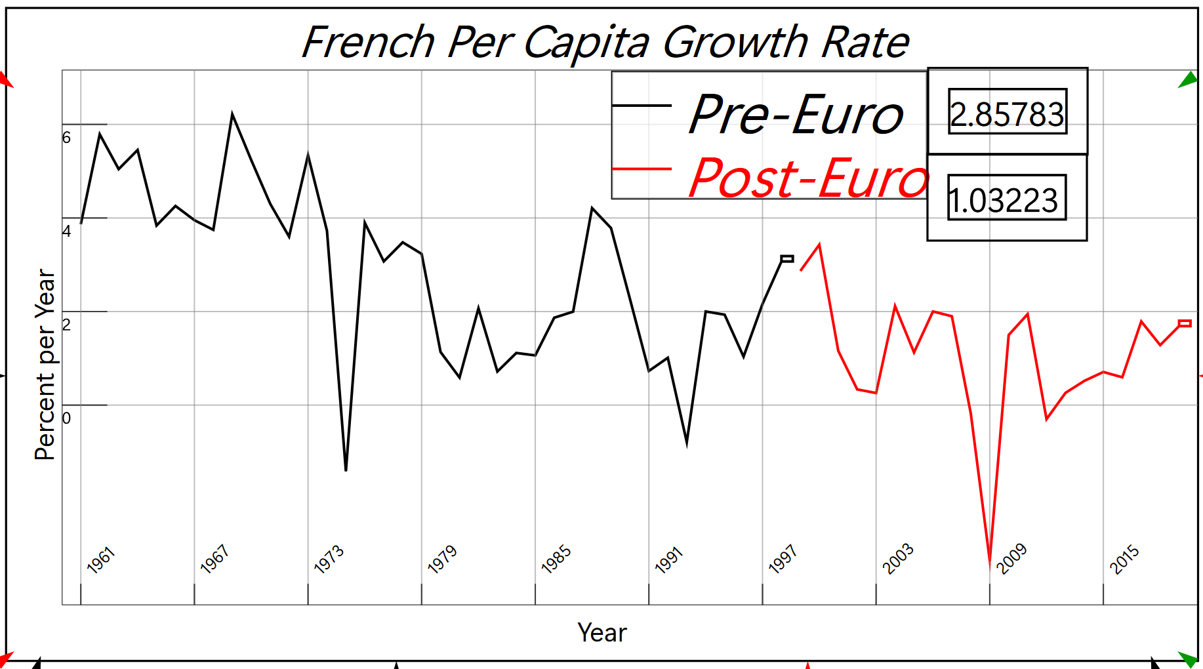
Figure 11
In this post, I’ll explain the chief theoretical lie behind its failure. This is the belief that high government debt, and large deficits, are the main dangers that a market economy faces. This is why the “Stability and Growth Pact” put limits on both: it proclaimed that government debt should not exceed 60% of GDP, while deficits should be no larger than 3% of GDP.
In fact, these rules are based on economic fallacies. The belief that government debt is dangerous is false, and this fallacy is the foundation of the “Stability and Growth Pact”. It is what has led, ultimately, to this revolt by students against the destruction of the French educational system in the name of “fiscal responsibility”.
When you understand the full monetary system, you realise that excessive government debt is not the main danger that capitalist economies face; and that a responsible government should run deficits—and use the money it creates in the process wisely. In this post, I will prove, using my Ravel software:
That governments must run deficits—they must spend more than they take back in taxation, if they are to create fiat-backed money; and
That a government deficit does not take money from the public, as economics textbooks claim. In fact, it does the exact opposite: it creates money for the private sector.
Once you understand the system, you’ll know that, if France is going to restore itself:
It has to leave the Euro, and restore the Franc;
The government should deliberately run deficits to create fiat-backed money; and
Those deficits should fund a quality education for all students.
My program Ravel is the only program that lets you understand the entire monetary system. Since everyone in France needs to know this, I am making Ravel free to download for anyone in France. Just go to Ravel’s website:
https://marketing.ravelation.net/
If you’re in France, a download voucher will appear (PS this will go live later this week, when a video based on this post is posted to YouTube). Fill out your details, and you’ll be able to download Ravel for free. You don’t have to, but if you’d like to thank me for this, consider making a donation via https://donateopen.com/@profstevekeen.

Figure 12: Download Ravel from here and learn how the monetary system really works
Think of Ravel as “the monetary telescope”. It’s what you need to understand the monetary system, in the same way that humanity needed the telescope before it was able to understand the structure of the cosmos.
For 1500 years, before Galileo perfected the telescope, anyone who did not believe that the Earth was the Centre of the Universe was ridiculed as a fool. The same now applies to people like me, and Richard Murphy, and Stephanie Kelton, when we claim, against the conventional wisdom, that government debt is not dangerous.
Today we know that Copernicus was correct when he asserted that the Earth rotated around the Sun.[1] But when he first put this alternative idea forward, the vast majority of people were believers in the Earth-centric paradigm, and they ridiculed him.
If the Earth is moving, then why isn’t there a permanent wind?
If the Earth rotates, why do things fall straight down when you throw them straight up?
If the Earth rotates, why aren’t we flung off the Earth, like children on a merry-go-round?
It took an invention to prove that Copernicus was right, and that invention was Galileo’s telescope. It enabled the planets to be observed in detail, and not merely by eyesight. When it revealed mountains on the moon, and moons orbiting Jupiter, the days of the Earth-centric vision of the Universe were numbered.[2]
The conventional economic models of money today are frankly even more deluded about the structure of the monetary system than the Ptolemaic model was about the structure of the Universe. At least Ptolemaic astronomers could predict where the planets would be in the future! Mainstream economists didn’t see the Global Financial Crisis coming, when that was the biggest economic event since the Great Depression. They’re the ones warning that government debt is dangerous. I did see the GFC coming, and I’m saying that government debt is not dangerous.
But most people side with mainstream economists. They think by analogy to household debt, that since a household which spends more than it earns can go bankrupt, so can a government.
This is why I invented Ravel. Amongst its many features is the capacity to show an integrated picture of the financial system, using something that most people think is boring, but which, in reality is as revolutionary in economics as the telescope was in astronomy: double-entry bookkeeping. Here’s Ravel’s interrace with a blank “Godley Table” loaded.
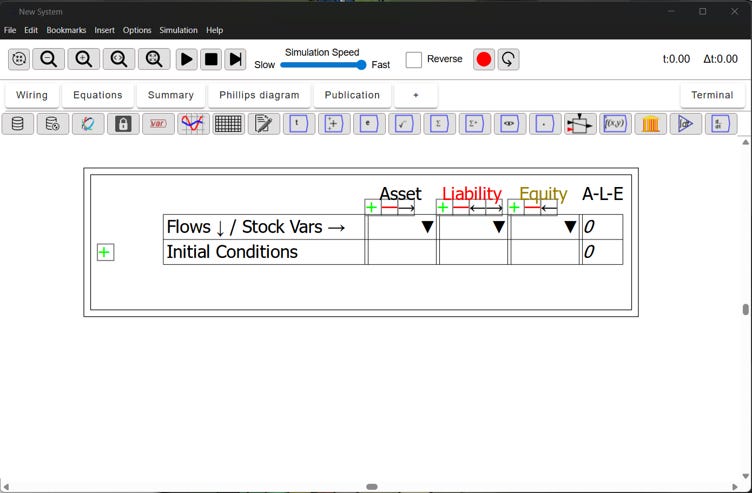
Figure 13: The Ravel interface, with a blank “Godley Table”. These are used to model financial dynamics
Now I know that the very thought of accounting makes most people start to fall asleep. But once you understand double-entry bookkeeping, you will know that the Eurozone obsession with minimizing government deficits is a monumental mistake. So I’m going to take you step by step though defining the most basic operations of a government: levying taxes, and spending on the public.
Since I know from experience how foreign this was of thinking about money is for most people, I’m going to take it very, very slowly. Let’s start with something that everyone, from raving anti-government free-enterprise advocates on the Right to revolutionary Marxists on the Left, must agree with: that taxation takes money out of the bank accounts of households and firms. In Ravel, this undeniable fact looks like this (see Figure 14):
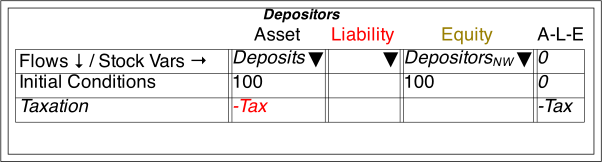
Figure 14: Taxation takes money out of the deposit accounts of households and firms
Whatever the government might do with this Tax revenue, taxation reduces the net financial worth of the entities paying the tax. Therefore, the second entry that double-entry bookkeeping requires shows that the net worth of depositors falls because of taxation:
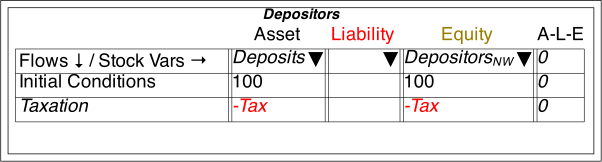
Figure 15: Taxation reduces the financial net worth of households and firms
When we look at this process at the level of the banking system, we already know that taxation reduces the amount in Deposit accounts. The only question is, what is the balancing second entry? The answer is that it reduces Reserve accounts—the accounts that private banks have at the Central Bank:
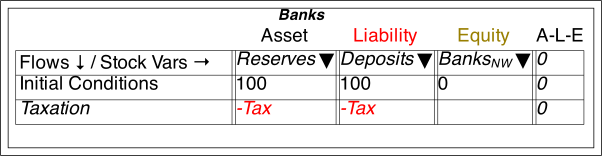
Figure 16
The reason that that entry is obvious when you see the system from the point of view of the Central Bank. The Central Bank is not only where the private banks have accounts, through which they interact with each other; it’s also where the Treasury has its accounts, via which it interacts with the private banks and, indirectly, us. The reason that Reserves fall because of taxation is that, at the Central Bank, revenue from taxation is transferred from the private banks to the Treasury:
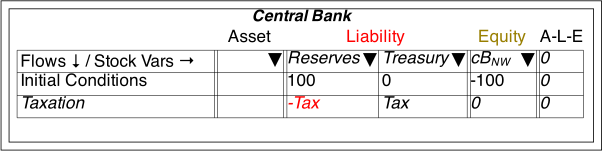
Figure 17
Finally, it should be obvious that taxation increases the financial net worth of the Treasury—and hence of the Government:
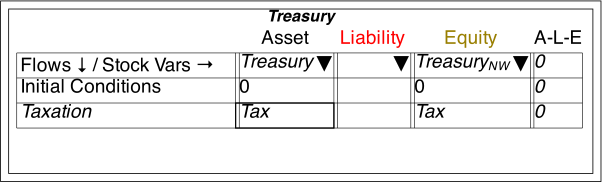
Figure 18
Therefore, taxation makes the government financially better off, and the non-government sectors financially worse off. That is obvious from our own personal experience of taxation, and it’s obvious from the double-entry bookkeeping as well.
Now let’s consider the other broad action of government: its spending. This clearly has the opposite effect. Whereas taxation increases the financial net worth of the government, spending reduces it:
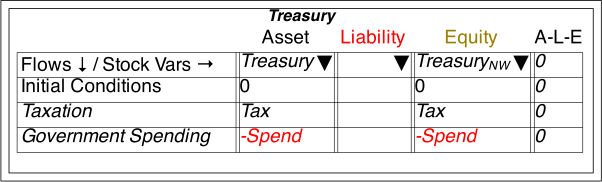
Figure 19
Here we come to the inescapable result of this exercise in accounting: what government spending and taxation do to the government’s net worth is the exact opposite of what it does to the net worth of the non-government sectors of the economy: taxation increases the net worth of the government sector, and reduces the financial net worth of the non-government sectors; government spending reduces the net worth of the government sector and increases the financial net worth of the non-government sector.
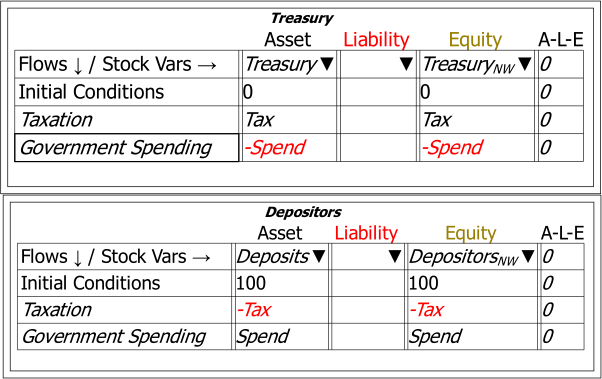
Figure 20: The equal and opposite nature of the government and the nonbank private sector
In a nutshell, a government deficit increases the amount of money in the bank accounts of households and businesses. This will sound counterintuitive to most people: they see the tax flowing out of their bank accounts; they don’t see government dollars coming in. But government contracts put money into some businesses, who spend on others. Government employees shop at supermarkets and indirectly pay the wages of the cashiers. And so on: this is why you have to look at the whole system, and not just one part in isolation—which is what economics textbooks and politicians and journalists do, when they talk about government debt in isolation from the rest of the system.
Ravel also lets you build economic models very easily, using the stocks and flows in these tables. In this very simple system, and in the real world, money is primarily the sum of all Deposit accounts at banks.
If you want to learn how to build these models from me, then sign up to my online course via https://www.skool.com/stevekeen/about, or https://www.stevekeen.com/.
Using the simple concept of the velocity of money—which economists from Karl Marx to Milton Friedman have all used at some point—the model shows GDP as being equal to deposits multiplied by the velocity of money. Then I have government spending and taxation as fractions of GDP. Finally, the deficit is the difference between spending and taxation. All these equations are built using easy-to-read flowcharts (see Figure 19).
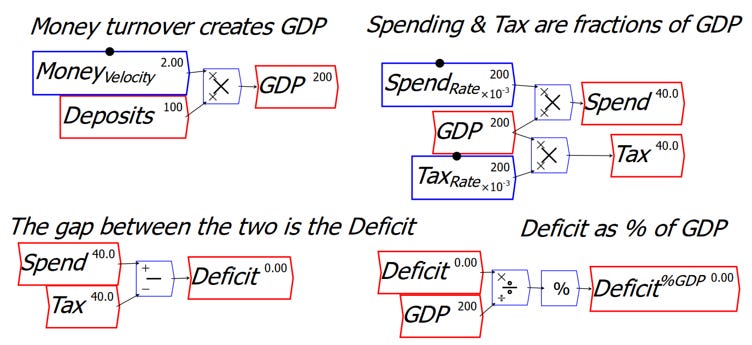
Figure 21: Simple flowchart equations to turn the accounting into a simulation model
When you simulate this model, you see the real effect of a government deficit: it creates money by increasing the amount in deposit accounts.
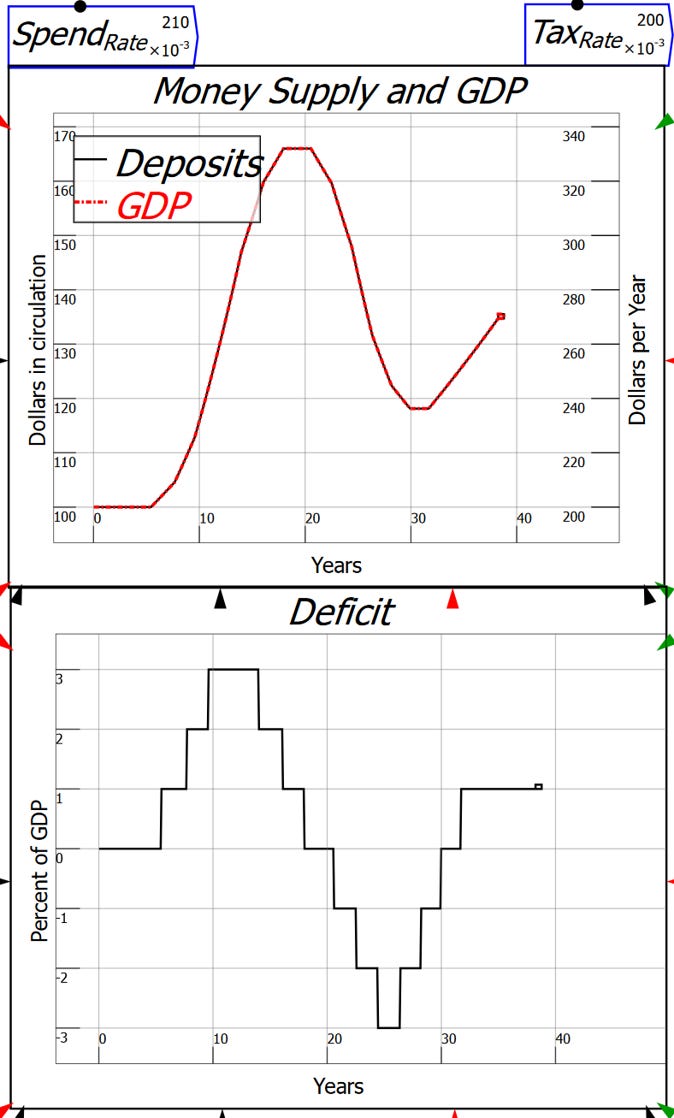
Figure 22: A government deficit increases the money supply and GDP
This is the exact opposite of what economics textbooks teach: they claim that a government deficit reduces the amount of money that the private sector has. So the mainstream view starts out as the exact opposite of the truth. The obsession with reducing the government deficit actually reduces the capacity of the economy to grow.
And the actions undertake to reduce the deficit, such as running down the education system, mean that France has less well-educated people to cope with the challenges of the future. Just when France will need scientists and engineers to address the challenges of global warming, France is shutting down science classes to reduce the deficit.
It might not look like I’ve covered the issue of government debt in this extremely simple model, but I have: the deficit pushes the Treasury’s account at the Central Bank into overdraft, and that is a form of debt. But it’s nothing like an overdraft for a private entity.
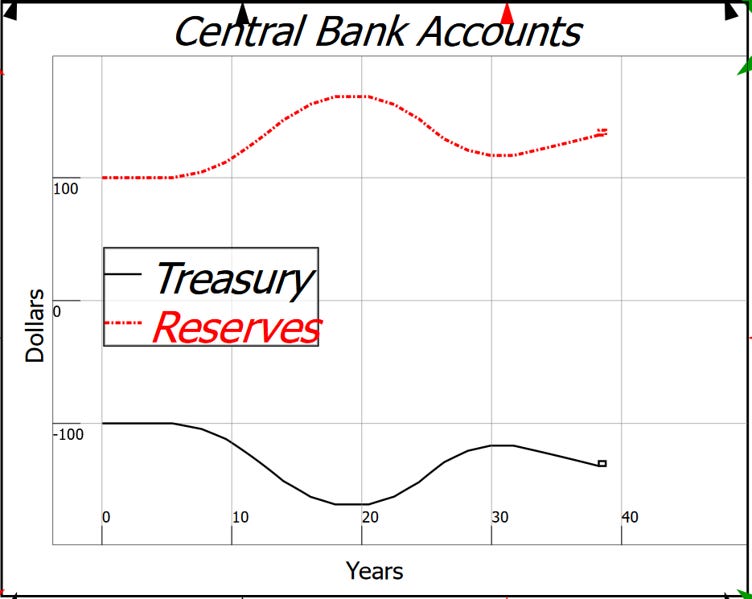
Figure 23: A government deficit pushes the Treasury’s account into overdraft
An overdraft is a real problem for a household or firm. If your bank account goes negative, your bank can point blank refuse to honour your payments, and there’s nothing you can do about it. If it lets you go into overdraft, it will charge you a penalty rate of interest. If your debt gets too high for its liking, it can initiate bankruptcy proceedings against you, and take your assets away from you. Overdrafts can be useful, but they are also dangerous for private entities.
None of this applies to the Treasury and the Central Bank. For starters, the Treasury owns the Central Bank. If it wants an overdraft, it can compel the Central Bank to give it one. This happened during Covid, when some governments wanted to spend right away, and didn’t want to waste time going through private bond sales first.
The Treasury also doesn’t face the penalty interest rate problem that private borrower face. In fact, in most countries, the Treasury doesn’t pay interest on bonds owned by the Central Bank at all. Either that, or any income the Central Bank makes is ultimately remitted to the Treasury anyway.
But it does look bad if the creation of money for the private sector by the government pushes the government’s account at the Central Bank into overdraft. There is, however, a simple solution: the Treasury can sell bonds to the Central Bank, and the Central Bank can give the Treasury the funds needed for the deficit.
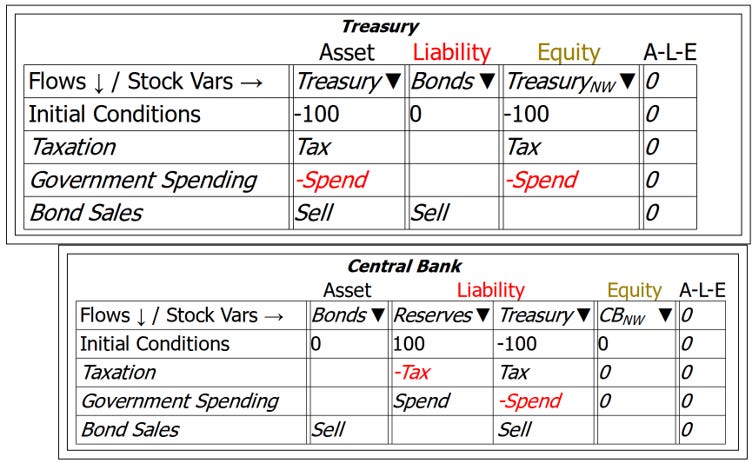
Figure 24: Government accounts when the Treasury sells Bonds directly to the Central Bank
This eliminates the overdraft problem. Instead, the Treasury’s account avoids going into overdraft because of a deficit.
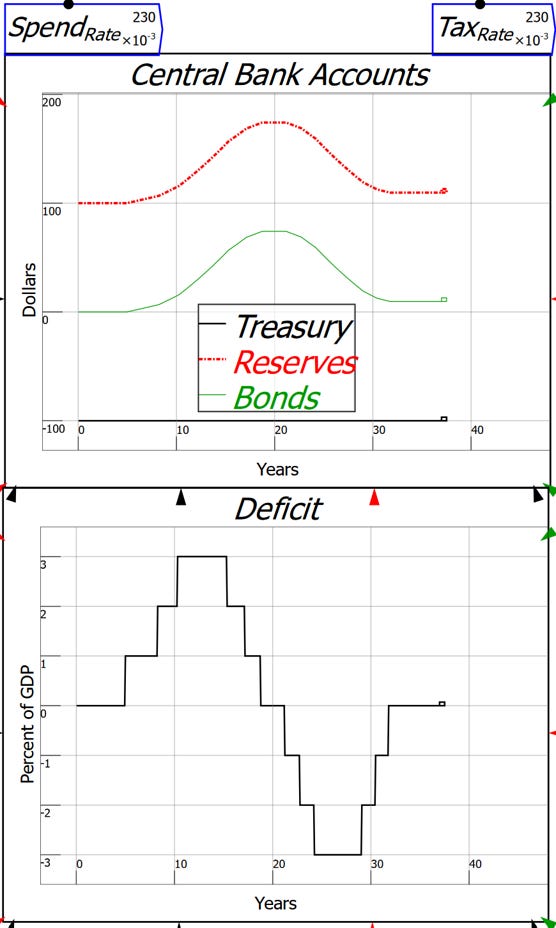
Figure 25: Treasury sells bonds to the Central Bank
Direct sales of government bonds to the Central Bank are banned in most of the world, and not just the Eurozone. But these bans have been drafted by people who don’t understand the monetary system. There is nothing in the accounting which prevents these sales, and if they take place, then government debt remains entirely within the government system. How then can it be a problem?
The real problem is that people who don’t understand money are in charge of the monetary system. If the French revolt is going to overcome the real problems France has, then it has to overthrow these false models of money as well. They are the real source of the decline in the quality of the French educational system.
In the next post in this series, I’ll show how the current system, which forces the Treasury to sell bonds to the private sector, is actually the worst possible way of managing government spending.
[1] See https://en.wikipedia.org/wiki/Nicolaus_Copernicus.
[2] He actually took an existing design and improved it by a factor of ten. See https://en.wikipedia.org/wiki/Galileo_Galilei#Scientific_contributions.
Steve, I can't believe I just discovered you, all because of an article I read in the Guardian critical of William Nordhaus. I'm one of those natural scientists who has been saying for years that economists are underestimating the cost of global warming. The criticism or Nordhaus sent me down a rabbit hole where I discovered you. I found that you has a Substack and I was going to stay free, but I saw your post about your current situation--so sorry to hear about your wife. I'm still working, so I can afford to help out a brilliant economist who is who is trying to help people see that the real economy does not revolve around neoclassical economic theory.
Hi Steve,
I also don’t agree with all the focus of the SGP on public debt and Govt deficit and even had a chance to enjoy Pasinetti’s papers on it. But I’m struggling with your "point of attack".
Let me focus on where you end your post, to see if I can finally understand where you (and the MMTers, btw) normally lose me.
In “the current system, which forces the Treasury to sell bonds to the private sector”, a debt-financed deficit is neutral (on a net basis, and ceteris paribus) from a money creation perspective (I’m looking at the end result in ‘D’, in terms of deposits in the system), but it is also neutral from a net wealth perspective as the private sector entity voluntarily swaps a deposit amount (a financial asset) for a debt security (just another financial asset with a different risk-remuneration profile). In fact, lets see what happens in tandem:
- In fact, the Govt issues this new liability (the debt security, purchased by private sector entities) in exchange for a new asset (i.e. by the amount “received” – or credited -- into its Treasury Account at the Central Bank, a specific asset of the Govt).
- The Central Bank sees its Treasury Account liability (i.e. a liability for the Central Bank) go up by the exact same amount that the reserves of the specific bank (that used its settlement balances) at the Central Bank (to execute the order of payment of the private sector entity) go down.
- And the specific bank that is in the middle of all this also just to figure out any eventually-needed liquidity operation in money markets (for which its reserves at the Central Bank are always the key aggregate, in terms of settlement) to ensure that the reductions in its deposit liability to the private sector entity (i.e. ‘D’ goes down) in favor of Govt are viable through a reduction in its reserves at the Central Bank (i.e. ‘R’ also goes down, by the same amount) that does not breach a precautionary minimum.
So, the debt operation that seems necessary in the “current system” for a debt-financed Govt deficit is also neutral from net wealth perspective (and not only net neutral from a monetary creation perspective), and we can always trust (once we abandon ceteris paribus) that an interest-rate targeting central bank (in terms of its operational framework for systemic liquidity management and monetary policy implementation) would ensure interest-rate spikes are avoided altogether.
Isn’t this enough to bomb the typical argument of “private sector investment is crowded-out by government deficits”? Is this not enough to ensure that we argue that Govt deficits do not affect interest rates by any other mechanism than a Central Bank response? Why do we need to enter into this confusion that MMTers have created?
Thanks
Joao