

The first computer model to predict the weather was developed in the 1960s (Manabe and Wetherald 1967). Over time, this research led to the development of “Global Circulation Models”, which are used for both weather forecasting and climate modelling (Edwards 2011). These programs have become increasingly sophisticated over time, given the importance of weather modelling to numerous industries, the military, and the general public. The main difference between weather forecasting models and climate models is the time period for simulations:
GCMs may be used to simulate either weather or climate. When used for climate studies, some resolution and complexity are sacrificed in order to permit longer model runs (20–100 years or more). (Edwards 2011, p. 131)
The very first computational weather model treated the atmosphere as a single column of air, and it gave the first empirical prediction of the impact of rising CO2 levels, that doubling CO2 would increase global temperature by 2.6°C (Manabe and Wetherald 1967). Subsequent models added the other two spatial dimensions, and additional factors that affect climate, such as “friction between land or ocean surfaces and the air, heat transfers between the ocean and the atmosphere, effects of particulate aerosols, and many other processes” (Edwards 2011, p. 131). They are underpinned by scientific laws including “Newton’s laws of motion, the hydrodynamic state equation, mass conservation, and the thermodynamic energy equation” (Edwards 2011, p. 130), the Navier-Stokes equations for fluid flow, and many other deep scientific principles.
The accuracy of both weather and climate forecasts have risen over time as a result. There are still enormous weaknesses in these models: they necessarily work at high levels of aggregation, when weather processes operate at as low as the molecular scale; clouds are difficult to model, since they both reflect and absorb heat; and so on. But the models have predicted global average temperatures very well, and shown that the increase in temperatures over the last century can only be explained by human activity. They also predict many other consequences of global warming, including both extreme storms and drought, since the moisture content of air rises 7% for every 1°C increase in temperature.
These models are the gold standard in modelling the climate. And economists do not use them.
Instead, they made up their own highly simplified models using only temperature, and with a far simpler model of the climate. As usual, William Nordhaus initiated this practice.
Having seen off the Limits To Growth model in 1973 (Nordhaus 1973), Nordhaus had created a vacuum, in that there were no other models which attempted to predict the social impact of climate change. He filled that vacuum with DICE in 1993 (Nordhaus 1993a), where the acronym stood for “Dynamic Integrated Climate and Economy”. The word “Integrated” refers to the fact that DICE uses it own, highly simplified climate model, rather than models developed by climate scientists, because “existing general circulation models (GCMs) are much too complex to be incorporated in economic models” (Nordhaus 1992, p. 1316).
This is more of an excuse than a reason. Economic models could have taken in the outputs of GCMs, with the multifaceted climatic changes they predicted in terms of rising average temperatures, the increase in the moisture content of the atmosphere, the severity and frequency of storms and droughts, changed atmospheric and oceanic circulation patterns, ocean acidification, biodiversity loss, and so on, and used those to predict economic damages. However, Nordhaus’s simplistic starting point could have been excused if economists had improved their modelling of the climate over time.
They didn’t.
Nordhaus’s first version of DICE in 1993 divided the biosphere into three regions—the atmosphere, the upper layer of the oceans, and the deep oceans—and considered temperature change as the only effect of climate change (Nordhaus 1992, p. 1316). The 2024 version of DICE likewise divides the biosphere into three regions, and has temperature increase as the sole effect of global warming (Barrage and Nordhaus 2024).
There are more complicated IAMs—“Integrated Assessment Models”, as economic models of climate change are known—than DICE, but DICE is indicative of their primary weaknesses, of considering temperature only, of ignoring all other aspects of the climate, and of calibrating their models on the basis of current GDP and temperature data.
Nordhaus did concede that economists have ignored the many of the ways in which global warming will change the climate, and potentially damage human civilisation:
It is important to note that surveyed studies generally omit many climate change impact channels, such as biodiversity loss, ocean acidification, extreme events, and social unrest. (Barrage and Nordhaus 2024, p. 3)
His response to these omissions was to add an additional 1% for losses from triggering tipping points—an issue which I’ll return to in the next chapter—and another 0.5% damage to GDP for “climate change impacts not yet reliably quantified in the literature”:
The second component, based on a comprehensive study of tipping points (Dietz et al. 2021a), adds a 1% output loss at a 3 °C warming. The third component is a judgmental adjustment for excluded impacts totaling 0.5% output loss at 3 °C warming. This adjustment reflects concerns over missing sectors, climate change impacts not yet reliably quantified in the literature, uncertainty, and recent research that is not reflected in our synthesis of aggregate damage estimates. (Barrage and Nordhaus 2024, p. 3. Emphasis added)
Nordhaus’s “judgmental adjustment” of a 0.5% fall in future GDP for “impacts not yet reliably quantified” is plucked out of thin air: the real figure could be anywhere between 0% and 100%. The adjustment is both arbitrary and trivial: a 0.5% fall in GDP in 2100 (Nordhaus’s usual date for future estimates) amounts to a 0.0066% fall in the annual rate of economic growth between 2024 and 2100, which is 1/15th of the accuracy with which change in GDP is measured today.
The “comprehensive study of tipping points” which Barrage and Nordhaus alluded to above confirmed that no IAMs consider any aspect of climate change apart from the temperature increase, when it noted that “effects other than temperature change … have yet to be incorporated in economic studies”:
AMOC slowdown is expected to have physical effects other than temperature change, for instance effects on precipitation and regional sea levels (68), but these have yet to be incorporated in economic studies. (Dietz et al. 2021a, supplementary information, p. 25)
Recall Blatt’s criticism of Neoclassical modelling in general that “A baby is expected to first crawl, then walk, before running. But what if a grownup man is still crawling? At present, the state of our dynamic economics is more akin to a crawl than to a walk, to say nothing of a run”. If economists were serious about global warming, they would have strived to incorporate these effects other than temperature rise over the more then 30 years since Nordhaus first developed DICE. But they haven’t. Keeping the models simple, and keeping damage estimates trivial, has mattered more than realism.
IAMs are based on the Neoclassical macroeconomic models that I dissected in Chapter 10, which treat capitalism as a utility-maximizing and cost-minimizing system. Rather like the relationship between weather forecasting and climate change analysis by scientists, standard Neoclassical models purport to explain the short-tern macroeconomic cycle, while IAMs ignore the short-term cycle and instead focus on the maximization of gains from mitigating global warming, versus the costs of doing so.
These costs and benefits from policies intended to attenuate global warming are then optimised, to predict the time path of global warming which maximizes human welfare through time at the minimum possible cost. This led to Nordhaus’s claim, in his 2018 “Nobel” Prize lecture, that the welfare-maximizing path for global warming would see the global average temperature stabilize at 4°C above pre-industrial levels by 2150—see Figure 56.
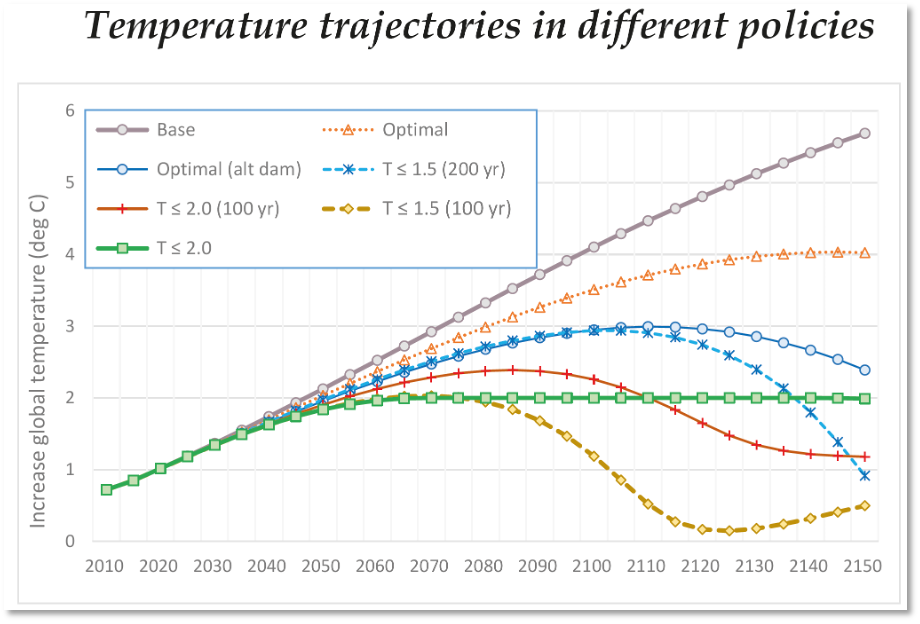
Figure 1: Slide 6 in Nordhaus’s “Nobel” Prize lecture (https://www.nobelprize.org/uploads/2018/10/nordhaus-slides.pdf)
The two functions that Nordhaus’s model optimized were one which allegedly measured the benefits of attenuating global warming, and another estimating the costs of reducing warming. Both are simple functions of temperature,95F[1] with the former based on pretending that the economic cost of global warming over time can be discerned from the weak relationship between temperature and income over space today.
